How to Make Exercise a Habit That Lasts: What the Research Says
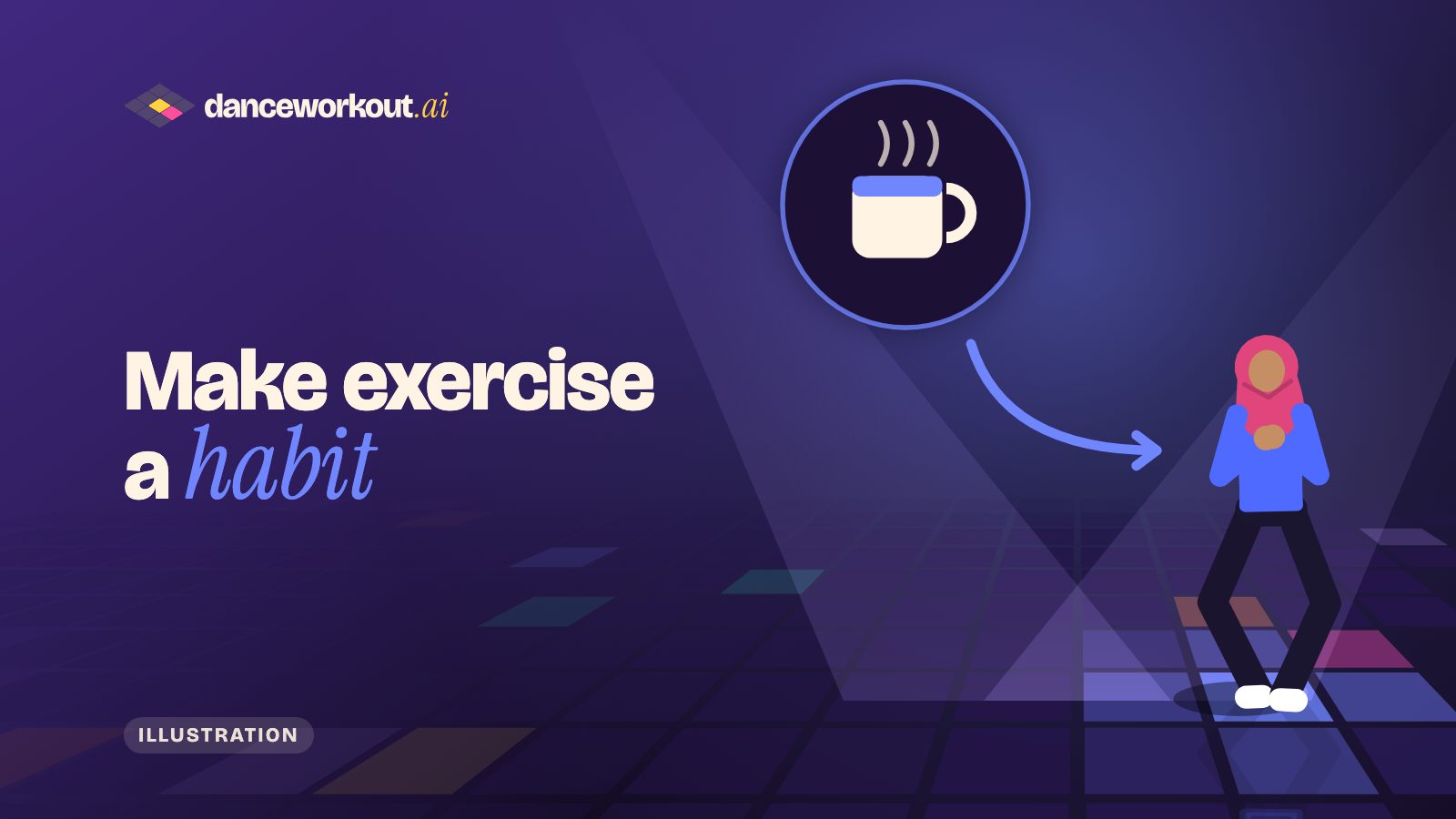
To make exercise a habit, pick a short workout you enjoy and do it at the same time every day, right after something you already do, like your morning coffee. Then keep repeating it. In research, new habits took about two months on average to feel automatic, longer for some people, and missing one day did not undo them.
That is the short answer. Below is what a habit really is, how long it takes, seven steps the research supports, what to do when you miss a day, and how to tell when the habit has taken hold. We also say where the evidence is strong and where it is thin.
What makes exercise a habit?
A habit is an action your situation starts for you. Psychologists describe it as something you do with little thought, because you have repeated it many times in the same setting. In a guide by habit researchers at University College London, the setting acts as a cue: you finish your coffee, and the cue reminds you to move, without a debate.
This matters because motivation comes and goes. The same researchers note that habits are likely to keep going even after your motivation or interest fades. Motivation helps you start. A habit is what carries you through a tired Tuesday.
How long does it take to make exercise a habit?
Longer than the popular 21 days, for most people. In a well-known study, Phillippa Lally and her team at University College London asked 96 volunteers to repeat one eating, drinking or activity habit each day in the same situation, such as after breakfast, for 12 weeks. The time it took for the action to get close to its peak of automaticity ranged from 18 to 254 days. In a later summary, the researchers put the average at about 66 days and suggested people expect around 10 weeks.
Exercise may take longer than simple habits. The same summary notes that simple actions, like drinking a glass of water, became automatic faster than more demanding ones, like doing 50 sit-ups. A 2023 study of gym attendance using over 12 million data points found that going to the gym typically took months to become a habit, while handwashing by hospital staff took weeks.
A 2024 analysis of 20 studies with 2,601 people found that, in the four studies that timed it, the middle values were 59 to 66 days and the averages 106 to 154 days, with individual times from 4 to 335 days. The authors note that many of the studies had a high risk of bias, so read these numbers as a rough guide. What is well supported is the pattern: habits form gradually, over weeks to months, and people differ a lot.
How do I build an exercise habit, step by step?
These seven steps come from the research above. None of them needs much willpower, which is the point.
- Start smaller than you think. Habit researchers advise small, manageable changes, because simpler actions become automatic faster. In a study of 111 new gym members, keeping exercise simple was one of the things that predicted a habit forming. Fifteen minutes is plenty; five is fine on a hard day.
- Tie it to something you already do. Choose a cue that happens every day, then make a plan: "After I finish my morning coffee, I will dance for 15 minutes." This kind of if-then plan has a small to medium effect on physical activity, according to an analysis of 26 studies.
- Keep the same time and place. Repetition in the same situation is how the cue takes hold. In the gym study, consistency and the setting both predicted the habit. Choose the habit and the time yourself: in the 2024 analysis, habits people picked for themselves tended to be stronger, and so did morning ones.
- Make it enjoyable while you do it. A look at 24 studies found that feeling good during moderate exercise was linked with doing more exercise later. Feeling good afterward was not. So choose music you love and an effort that feels good, and save harder sessions for when the habit is steady. The American College of Sports Medicine also says exercise that is pleasant and enjoyable helps people stick with it.
- Plan for the obstacles. Think of what usually gets in the way and write an if-then for it: "If I get home late, I will dance for one song before dinner." The same analysis found these plans worked better when they included managing obstacles.
- Track it where you can see it. An analysis of 138 experiments found that monitoring progress helped people reach their goals, more so when the progress was written down or shared with others. A tick on a paper calendar works. So does telling a friend.
- Repeat often. In the gym study, new members needed to exercise at least four times a week for 6 weeks before the habit was established. Daily practice gives your cue the most chances to stick.
What if I miss a day?
Pick it up again the next day. In the Lally study, missing one opportunity did not materially affect how the habit formed. The researchers later wrote that progress soon picked up again after one missed day.
A missed day is normal, and it is no reason for guilt. What helps most is getting back to your cue quickly. On the day after a break, make the session smaller: one song, five minutes, the easiest version. The aim is to keep the link between your cue and moving, so the length can wait.
What do people get wrong about exercise habits?
| The common belief | What the research suggests |
|---|---|
| It takes 21 days. | Usually longer: about two months on average, from a few weeks to many months. |
| One missed day ruins it. | Missing one day did not materially affect habit formation in the Lally study. |
| You need lots of willpower. | Habits help because they rely less on willpower. A cue and repetition do the work. |
| Go big to see change fast. | Simpler, smaller actions become automatic faster. |
| Hard workouts build discipline. | Enjoying the exercise while you do it is linked with doing more later. |
Does it matter how hard I exercise while the habit forms?
Less than you might think, at the start. While the habit is forming, showing up matters more than going all out. We make that case in Consistency over intensity, and the research above supports it: simple, enjoyable and frequent is what predicts a habit.
Once the habit is steady, you can build up gradually. If you are wondering whether a short daily session does enough for your health, we look at the numbers in Is 15 minutes of exercise a day enough? And if you want a ready-made plan to repeat, try our beginner dance workout at home.
How will I know exercise has become a habit?
You will notice that you start without deciding to. The cue arrives, the coffee cup is empty, and you are already reaching for your shoes. Researchers measure this as automaticity: doing something without having to think about it or remind yourself. Skipping it may start to feel a little strange. When that happens, the habit is doing the work for you.
Starting something new? Check with your doctor first if you are pregnant or recently gave birth, have a heart condition, joint problems or another health condition, or have not been active for a long time. Stop and get checked if you feel chest pain, dizziness, unusual shortness of breath, or pain in a joint.
Making the first 30 days easier
danceworkout.ai is built around these ideas: one short dance a day, a new one ready each time, an AI coach to guide you, and friends to dance with. We start together on January 1, 2027, with Dance Workout: Level 1, a 30-day dance workout of 15 minutes a day, and the app is free all of January. Those 30 days are a first stretch of a habit that takes longer to finish. If you would like company for it, the waitlist is open.
Questions people ask
How long does it take to make exercise a habit?
Usually a couple of months, and often longer. In a well-known study, it took about 66 days on average, but it varied from 18 to 254 days between people. A large study of gym-goers found exercise typically took months to become a habit, so be patient with yourself.
Is 21 days enough to form a habit?
For most people, probably not. The 21 day idea is popular, but the studies that measured habit formation found it usually takes longer, around two months on average, with a very wide range between people.
Will a 30-day challenge make exercise a habit?
It is a good start, and it gets the repetitions going. But research suggests habits usually take longer than 30 days to feel automatic, so plan to keep going after the challenge ends, even with shorter sessions.
Is it better to exercise at the same time every day?
For building a habit, yes. Habits form when you repeat the same action in the same situation, so a fixed time and place, right after something you already do every day, gives your workout a reliable trigger.
What is the easiest exercise habit to start?
A short, simple session you enjoy. Research on habits finds simpler actions become automatic faster, and how good the exercise feels while you do it is linked to doing it again. A few minutes of dancing to a song you love is a fine first habit.
Sources
- Lally and colleagues (2010), how habits are formed in daily life, European Journal of Social Psychology
- Gardner, Lally and Wardle (2012), making health habitual: the psychology of habit formation, British Journal of General Practice
- Singh and colleagues (2024), how long health habits take to form: an analysis of 20 studies, Healthcare
- Buyalskaya and colleagues (2023), habit formation in gym attendance and handwashing, PNAS
- Kaushal and Rhodes (2015), how new gym members form an exercise habit, Journal of Behavioral Medicine
- Rhodes and Kates (2015), how exercise feels and whether people keep exercising: 24 studies, Annals of Behavioral Medicine
- Harkin and colleagues (2016), tracking progress toward a goal: 138 experiments, Psychological Bulletin
- Bélanger-Gravel and colleagues (2013), if-then plans and physical activity: an analysis of 26 studies
- American College of Sports Medicine (2011) position stand on the quantity and quality of exercise for adults
Ready to start?
Join the waitlist and start Dance Workout: Level 1 with us on January 1, 2027 (30 days, 15 minutes a day). The app is free all of January.
Join the Waitlist